For more than two thousand years, the world has searched for the final resting place of Alexander the Great — the conqueror who built the largest empire the ancient world had ever seen.
History records his death in 323 BC and the preservation of his body in Alexandria. What history does not explain is what happened next.
My novel Mona Lisa’s Secret explores a provocative and cinematic possibility: that the greatest archaeological mystery in history was not lost, but hidden in plain sight inside St Mark’s Basilica.
The Shrine of Two Legends
Tradition holds that the remains of Saint Mark were retrieved from Alexandria in 828 AD by Venetian merchants.
They transported the body to Venice, hiding it beneath vegetables and pork to avoid inspection.
But in the world of Mona Lisa’s Secret, the mission was never as simple as retrieving a saint.
According to the novel’s narrative, both Alexander and Saint Mark were said to have been interred within the same burial complex in Alexandria during a period of religious and political upheaval.
As Christianity rose in influence and pagan worship declined, Alexander’s cult feared the destruction of their sacred shrine. The story proposes the formation of a secret society dedicated to protecting the legacy of the great general.
The solution was brilliant in its simplicity.
Hide the king.
Hide him inside the story of a saint.
The Exchange That Changed History
The novel introduces a haunting inscription discovered on a golden throne:
“In honor of our great general, and the exchange that secured his final resting place.”
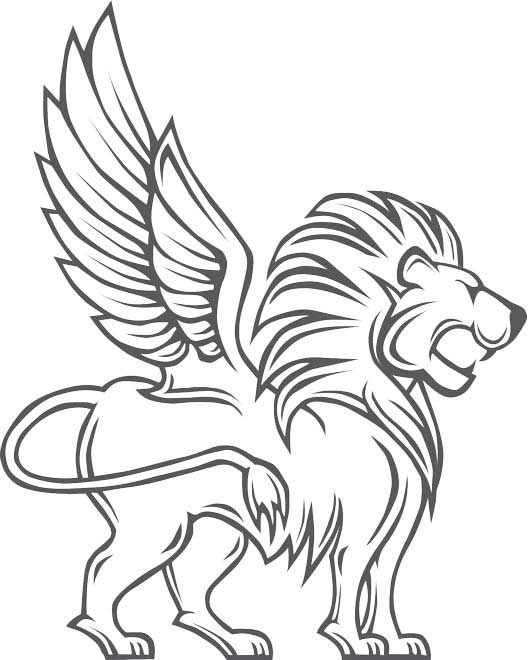
The throne also bears the image of a winged lion with a sun halo — the symbol associated with Saint Mark and the city of Venice.
Carved along the armrests are hundreds of pigeons, echoing the famous population of birds that inhabit St Mark’s Square.
To the characters in the novel, these symbols were not accidental decoration.
They were historical testimony.
The lion represented the saint’s identity used as a protective mask.
The pigeons symbolised the location where the body would ultimately be revered.
The exchange, the novel suggests, was the relocation of Alexander’s body disguised as the relics of Saint Mark.
The Venice Revelation
The year 828 AD becomes the turning point of the story.
Greek monks, acting as intermediaries for the secret society, are said to have negotiated with Venetian merchants.
The body was transported by ship and hidden inside a chest filled with vegetables and pork — a detail historically recorded in Venetian legend.
Whether by deliberate design or tragic mistake, the novel proposes that the monks believed they were moving the apostle’s remains.
Instead, they may have secured the tomb of the world’s greatest conqueror.
The Silence of the Church
Within the story, characters speculate that the modern church is aware of the possibility.
As one character suggests, public revelation could destabilise religious authority and provoke social unrest.
During a climactic scene, the narrative references discussions surrounding DNA testing.
The idea is introduced that a scientific comparison could theoretically determine whether the remains in Venice share ancestry with the Macedonian royal line.
The novel notes the discovery of the tomb of King Philip II of Macedon in northern Greece in 1977, suggesting that genetic analysis could one day resolve the mystery.
But the characters also express a profound ethical dilemma — that sometimes knowledge itself can carry consequences beyond science.
The Final Cinematic Truth
The ending of Mona Lisa’s Secret is deliberately symbolic.
When global religious authority visits the basilica, the reaction is not public confession but quiet departure.
The scene is framed through the perspective of history rather than confrontation.
The leader of the Catholic Church — represented in the narrative by Pope Francis — turns away from the basilica without speaking.
Outside, a gray-bearded archbishop approaches and asks quietly:
“Is it true, padre?”
The pope does not answer. He simply walks away with his head down.
At the entrance to the basilica, the commanding general holding the laptop with the results at hand, is instantly surrounded by priests demanding the truth.
Raising his arms to calm them, he says:
“Quiet, please. You are men of God. It doesn’t matter whose bones were left in that box. Go and fulfill your duties. All that matters is that whoever was buried here was a Great Man.”
The words settle over the crowd like a final blessing.
Watching all this unfold from the upper balcony level, the main character slowly turns his gaze back toward the shrine inside the basilica. This time, he freezes.
He does not want to look away.
How had he missed it?
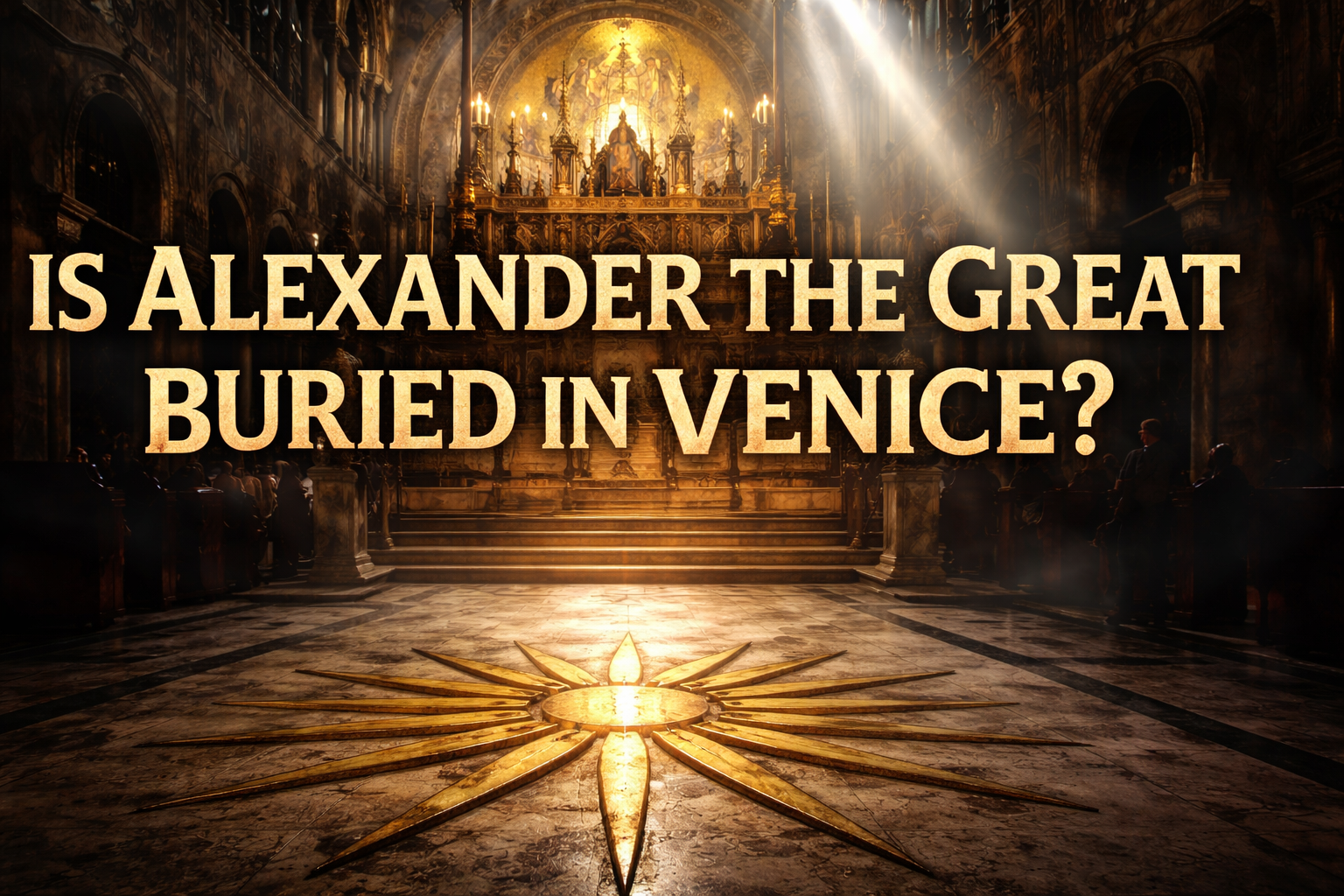
Embedded in the marble floor beneath the altar that once held the relics was a golden sun symbol — sixteen rays radiating outward, each ending in a sharp point.
It was the emblem of the greatest general who ever lived.
The symbol sat directly beneath the sacred space said to have once protected the saint’s remains.
The light from the basilica windows reflected softly across the stone, making the rays appear almost alive, as if the sun itself were rising from beneath the church.
The truth had been in plain sight all along.
Not hidden in desert tombs or forgotten cities.
But carved into the architecture of devotion, guarded by centuries of faith, and watched silently by millions who passed over it without question.
Boyce felt a strange calm settle over him.
History was not shouting the answer.
It was whispering it.
And sometimes, the greatest secret in the world is not discovered.
It is preserved.
Because some truths are too powerful to be spoken.

The Mystery That Still Lives
Whether historical fact or literary imagination, the question continues to intrigue readers and historians alike.
Could the greatest military leader in ancient history truly rest beneath one of Europe’s most visited churches?
Or is it the power of storytelling that allows us to see meaning in stone, mosaic, and legend?
What Mona Lisa’s Secret ultimately explores is not just the fate of a king, but the human desire to preserve greatness — even if it means hiding it in plain sight.
Some mysteries are solved.
Others are protected.
And some are so carefully preserved that the world walks over them every day without ever knowing.